At SAPH – Toupah Agro-Industrial Unit, GreenExperts.sarl connects awareness raising, waste sorting and recovery. Explore the project in pictures, the students’ commitment and exchanges with PALMCI, alongside our other projects.
SAPH – Toupah Agro-Industrial Unit
At SAPH – Toupah Agro-Industrial Unit, the fight against pollution has a human face.
Residents getting involved, students reaching out to families, teams sorting and recovering materials: GreenExperts.sarl supports an approach rooted in everyday life in the SAPH residential community. These photographs tell the story of the project at SAPH – Toupah Agro-Industrial Unit and the people moving it forward.
A clearly defined scope: the project presented here concerns SAPH – Toupah Agro-Industrial Unit, where waste management is gradually being brought under control. It does not concern Toupah village, where conditions remain precarious. The activities shown here must therefore not be attributed to the village.
Local mobilisation
From the classroom to people’s doorsteps.
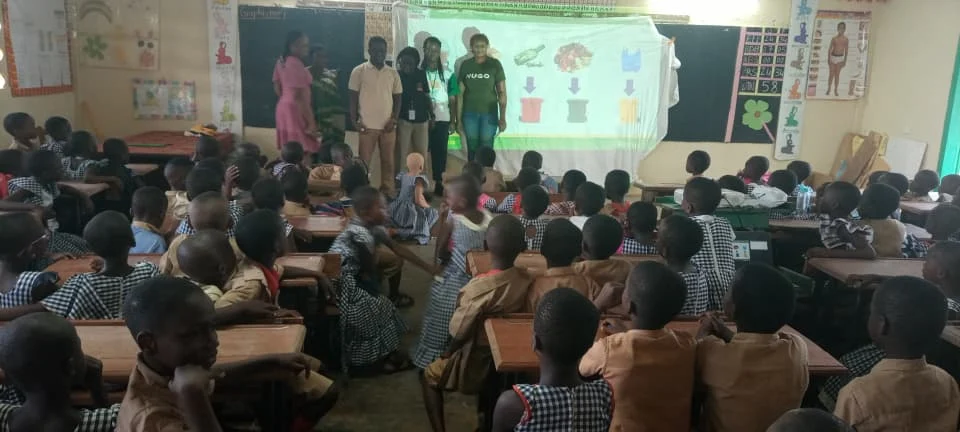
Waste sorting instructions become meaningful when they connect with daily life. At SAPH – Toupah Agro-Industrial Unit, awareness raising involves residents and students. The students actively participated in a door-to-door campaign in the SAPH residential community to explain environmentally responsible waste sorting.
By reaching out to families, young people put their learning into practice: protecting their living environment becomes an action they can lead themselves.
SAPH – Toupah Agro-Industrial Unit · A classroom session on environmentally responsible waste sorting.SAPH – Toupah Agro-Industrial Unit · Students taking part in the environmental initiative.
Sorting and recovery
Giving good practices the means to last.
For GreenExperts.sarl, fighting pollution involves practical organisation: clearly identified collection points, separated waste streams, weighing and ongoing composting work. Each step prepares the next.
Directing biodegradable waste towards composting creates a recovery opportunity. Keeping it going depends on sorting quality, operators’ care and the resources available to them. We support this sustained, day-to-day work.
SAPH – Toupah Agro-Industrial Unit · A labelled compartment for plastic waste.SAPH – Toupah Agro-Industrial Unit · Operators working the materials in a composting bay.
Student engagement
Recognising those who bring the message to life.
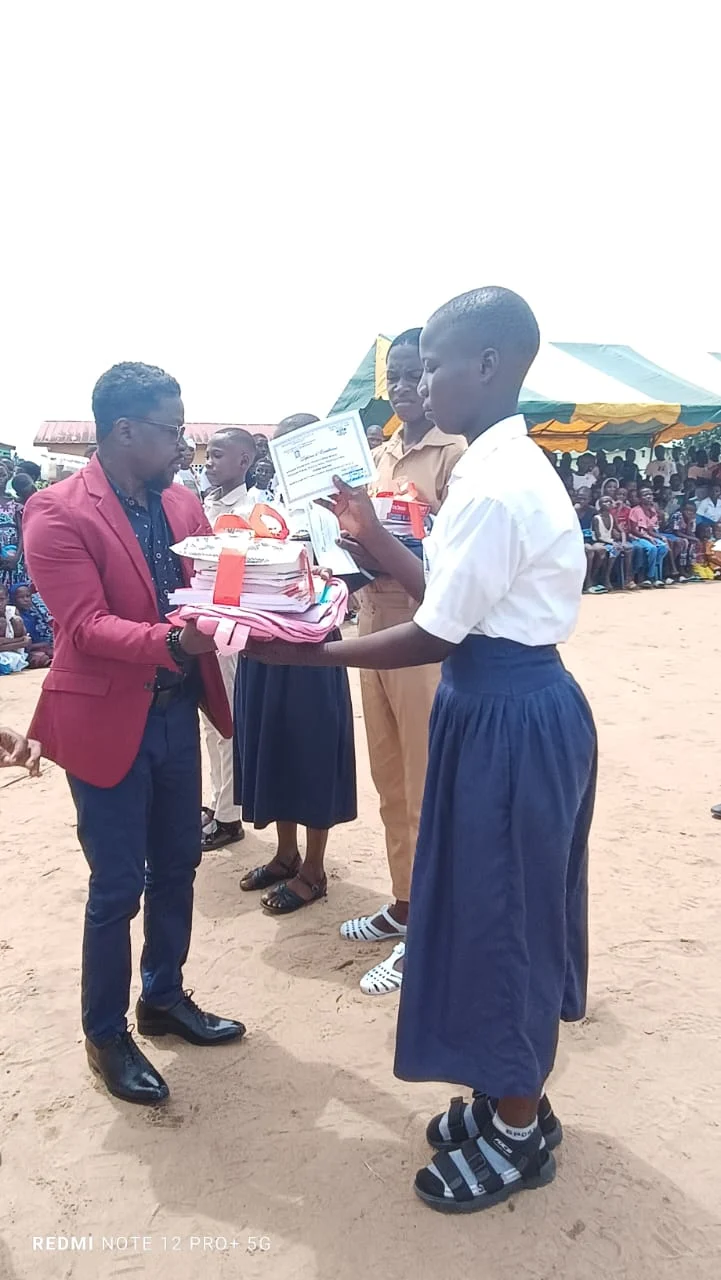
The awards presented to students recognise their active participation in door-to-door awareness raising on environmentally responsible waste sorting in the SAPH residential community. They honour time given to others, initiative and a willingness to take responsibility.
These young people carried the message into people’s homes. Their commitment reminds us that environmental action also grows through personal contact and shared learning.
SAPH – Toupah Agro-Industrial Unit · An award recognising commitment to door-to-door awareness raising.SAPH – Toupah Agro-Industrial Unit · Recognising students who brought the waste sorting message to residents.
PALMCI visit · Benchmarking
Field experience that opens up dialogue.
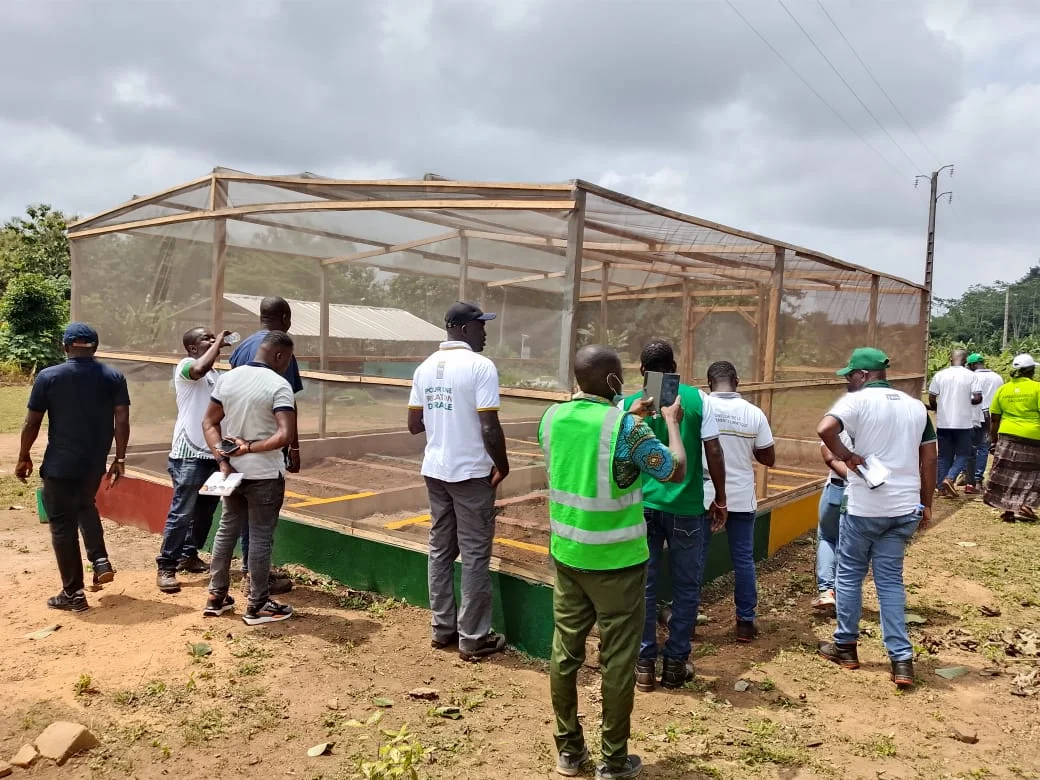
Visitors from PALMCI came to SAPH – Toupah Agro-Industrial Unit to learn from the experience developed with GreenExperts.sarl. Their visit was an exercise in benchmarking : observing practices, talking with those involved and identifying lessons relevant to their own context.
Sharing experience also means explaining the conditions that make it possible. Sorting arrangements, teamwork and residents’ participation provide a concrete basis for discussion. Our ambition is to share these lessons to support pollution prevention beyond a single site.
SAPH – Toupah Agro-Industrial Unit · PALMCI visitors explore the facilities during a benchmarking visit.SAPH – Toupah Agro-Industrial Unit · Discussions and note-taking to learn from the experience.
Preventing pollution starts with an action. Sustaining it requires a community, organisation and a lasting commitment.
An approach connecting organisation, sorting and recovery
GreenExperts supports sustainable household waste management within SAPH. The work extends beyond collection to source separation, team organisation, operational monitoring, awareness raising and the recovery of biodegradable materials.
Experience at the pilot site informs a broader understanding of the conditions for success: stable teams, sorting quality, available equipment, supervision and user ownership.
Structuring sorting and collection practices
Operational monitoring and continuous improvement
Documenting lessons for transfer to other settings
Pilot project under monitoringSAPH – Toupah Agro-Industrial UnitSorting and composting
From biodegradable waste to a useful resource
At SAPH – Toupah Agro-Industrial Unit, the pilot project turns biodegradable waste into compost while monitoring sorting quality, maturation, moisture and organisational challenges. This experience shows that good technical results depend as much on consistent upstream sorting as on the composting process itself.
The documented cycle recorded 43,701.21 kg of incoming materials and an estimated 19,665.54 kg of stabilised compost, based on a reference yield of 45%. For the January–May period analysed separately, average sorting compliance was 57.47%, with a marked decline towards the end of the period, supporting the need for stronger awareness raising and supervision.
43.7 tIncoming materials over the documented cycle
19.7 tEstimated stabilised compost
57.47%Average sorting compliance, January–May
Strengthen source separation
Stabilise teams and supervision
Improve protection from rain, screening and compost characterisation
Project in preparationMorondoIntegrated urban sanitation
Building the system on an initial assessment
The municipality of Morondo is preparing an integrated urban sanitation, waste management and recovery project with GreenExperts. The proposed approach covers assessment, sorting, awareness raising, training, collection arrangements, a waste reception facility and recovery streams: compost, plastic paving blocks or bricks, and biomass charcoal.
At this stage, no operational results can yet be reported. The initial assessment, planned as a prerequisite, will establish the baseline, assess the feasibility of options and develop the technical scenario, implementation budget and roadmap.
Participatory assessment and stakeholder mapping
Analysis of neighbourhoods, equipment, practices and problem areas
Selection of recovery streams and progressive system development